

Trucks earn money only while they are working, so the finance behind them has to match the work you actually do. Many operators sign a loan that looks affordable on paper, then feel the repayments squeeze cash flow during a slow month. If you are searching for a truck loan Australia businesses can rely on, the decision comes down to four numbers: the deposit, the term, the final payment and the interest rate. This guide explains how to finance a truck for your business, what lenders check before they approve, and where buyers lose money. On Road Finance has been connecting Australians with vehicle and asset finance since 2013.
Table of Contents
- Quick Takeaways
- Choosing the Right Truck Finance Structure
- What Lenders Check Before They Approve a Truck Loan
- New Versus Used Trucks: Where the Finance Risk Sits
- Deposits, Balloon Payments and Your Repayment Cash Flow
- Insuring and Protecting the Truck From Day One
- Comparing Your Main Finance Routes
- How NSW Operators Get a Truck Loan Approved
- Common Mistakes Truck Buyers Make With Finance
- Frequently Asked Questions
- References
Quick Takeaways
| Key Insight | Explanation |
|---|---|
| Match the structure to your cash flow | A secured asset loan gives you ownership from day one. Hire purchase lets you shape the term, deposit and final payment around your income. |
| Lenders assess the business behind the truck | Trading records, bank statements and a clear income source decide the approval. Gather them before you apply. |
| Price the balloon before you sign | A lower monthly repayment with a large final payment only works if you have a funded plan for that amount. |
| Used trucks shift the risk, not remove it | A cheaper purchase price brings higher repair exposure. Build a repair reserve into your monthly budget. |
| Insurance must be live on delivery day | Confirm cover that matches how and where the truck works, and align it with the lender’s requirements before settlement. |
| One application can reach many lenders | On Road Finance connects customers with over 40 lenders and credit providers, so your file can be matched to the criteria that fit it. |
| Test three terms before you commit | Run the same truck through the finance repayment calculator at different terms and compare the total amount repaid, not only the monthly figure. |
Choosing the Right Truck Finance Structure
The first decision is the structure, not the lender. A secured asset loan gives you ownership at the start, with the lender holding security over the truck until the loan is repaid. Hire purchase works differently, because ownership passes to you only after the final payment.

Choose a secured asset loan if you want to own the truck from the first day and you want a simple end point. Choose hire purchase if you need to shape the term, add a deposit or build in a balloon payment to lower the monthly figure. Neither structure is cheaper by default, so compare the total repayment over the full term.
Secured asset loans for operators with signed work
A secured asset loan suits an operator with a signed contract and steady work. You take title at the start, and the lender’s security is released once the final repayment clears. Ask your accountant how GST and depreciation apply to your business before you sign.
Hire purchase with a balloon for tighter cash flow
A balloon payment lowers each monthly repayment by deferring part of the cost to the end of the term. This works only if you have a funded plan for that final payment, whether that is savings, the resale value of the truck or a refinance. A common mistake is choosing the lowest monthly figure without asking what the final payment will be.
Pro tip: Run the same truck through three terms on the finance repayment calculator before you speak to a lender. Compare the total amount repaid, not just the monthly figure.
What Lenders Check Before They Approve a Truck Loan
Lenders assess the business as much as the truck. They want to see that income covers the repayment with room to spare, and that the business has a track record of work. Have your trading records, bank statements and business details ready before you apply.
Lenders approve the business behind the truck, so present that business clearly and completely.
Your business profile and income source
A newer business with a signed contract can still be approved, but the file must show where the income comes from. Sole traders and company directors should separate personal and business accounts early. Mixed statements slow assessment and raise questions you will have to answer under time pressure.
How credit history shapes your options
Credit history determines which lenders will consider your file and the rate you are offered. On Road Finance works with customers who have varying credit histories, so a past default does not automatically rule out a truck loan. A broker’s job is to match your file to lenders whose criteria fit it, rather than sending it to one lender and hoping for the best.
Low doc options for self-employed operators
Low doc loans suit operators whose tax returns do not yet show the full income picture. They typically carry a higher rate or require a larger deposit than a full documentation loan. Use a low doc loan as a bridge, and ask for a side-by-side comparison of the rate with and without it.
New Versus Used Trucks: Where the Finance Risk Sits
A new truck costs more upfront but carries lower early maintenance risk and a clearer warranty position. A used truck lowers the purchase price and the loan amount, but the risk shifts to repair bills and downtime. Your finance should reflect that risk rather than hide it.
Buying new for warranty and predictable costs
A new truck under a manufacturer warranty lets you budget repairs with more certainty in the early years. Where you can, set the term to finish within the warranty period, so the costliest repairs do not land at the same time as your heaviest repayments.
Buying used with a pre-purchase inspection
Lenders set age and kilometre criteria, and those criteria vary between lenders. A used truck that fails one lender’s criteria can pass another’s. Get a pre-purchase inspection from a mechanic who works on heavy vehicles, and include the report in your application, because a clean report makes the file easier to approve.
Budgeting for repairs on top of repayments
Set aside a fixed repair reserve each month and treat it as a running cost of the truck. Operators who skip this step find that one gearbox failure wipes out a month of margin. Build the reserve into your forecast before you sign, not after the first breakdown.
Deposits, Balloon Payments and Your Repayment Cash Flow
The deposit and the final payment decide how much cash you keep working with. A larger deposit reduces the amount financed and the interest you pay, but it drains working capital on the day you need it most. A balloon payment does the opposite, keeping repayments low while pushing a large cost to the end.

Sizing the deposit against working capital
Keep enough cash to cover several weeks of fuel, insurance and wages after the deposit clears. Operators who put every dollar into the deposit struggle when a client pays late. Your deposit should protect the business, not empty it.
Using a balloon without a surprise at the end
Write the final payment into your forecast from the first month, not in year five. If you plan to refinance at the end, the truck’s resale value and your business profile at that time will decide whether the refinance is possible. Plan for the worst version of that scenario.
A worked example of balloon versus standard repayments
Take a $150,000 truck loan over five years at an illustrative rate of 9%. A standard loan repays about $3,113 a month, or roughly $186,800 in total. Adding a $30,000 balloon at the end lowers the monthly repayment to about $2,716, but the total paid rises to about $192,960.
The balloon saves you about $397 each month and costs you roughly $6,160 more over the term. These figures are rounded and illustrative, not a quote. Run your own numbers before you decide which trade-off suits your cash flow.
Insuring and Protecting the Truck From Day One
Lenders expect the truck to be insured from the moment it is delivered, so cover must be in place before the first trip. Insurance belongs in the finance conversation, not after it. On Road Finance offers vehicle insurance brokerage, along with insurance and warranty options alongside its loans.
Matching cover to how the truck works
A truck running long freight routes has different exposures from a tipper working around building sites. Describe exactly how the truck will run and what it will carry, so the policy matches the work. A policy written for the wrong use can leave you exposed when you need it most.
Warranty and extended protection
Extended warranty cover can limit the cost of major mechanical failures, which protects your repayment schedule when a breakdown hits. Compare what each warranty excludes, especially wear items and modifications made after purchase. Read the exclusions before you pay for the cover.
Keeping the policy current through the loan term
Update your insurer whenever you change the driver, add equipment or move the truck into a new type of work. A policy that no longer matches the work can become a claim problem at the worst possible moment.
Pro tip: Send your broker the policy schedule and the lender’s insurance requirements in one email. Settlement stalls when these documents arrive in separate messages.
Comparing Your Main Finance Routes
Three routes cover most truck purchases in Australia, and each one suits a different operator. The table below sets out who each route serves and what you give up in return. Use it to narrow your options before you request a quote.
| Finance Route | Best For | Main Trade-Off |
|---|---|---|
| Secured asset loan | Operators who want ownership from day one and a simple end point | Repayments are based on the full loan amount, so monthly cash flow is tighter than with a balloon |
| Hire purchase with balloon | Operators who need lower monthly repayments and have a funded plan for the final payment | Ownership passes only after the final payment, and the balloon must be covered at the end |
| Low doc truck loan | Self-employed operators whose tax returns do not show their full income | Typically a higher rate or larger deposit, so it works best as a short-term bridge |
Choosing a route as a new operator
A new operator should prioritise cash flow over ownership speed. Hire purchase with a modest balloon gives you room to build contracts before the heaviest repayments arrive. Confirm the final payment in writing, and confirm how you will meet it.
Choosing a route for an established fleet
An established operator with a track record usually qualifies for a secured asset loan with a simpler file. Ownership from day one helps when you need to show asset value on your balance sheet. Use that certainty to negotiate the term, not just the rate.
How NSW Operators Get a Truck Loan Approved
Operators in Sydney, Penrith, Silverdale and across New South Wales often need approval quickly, because a contract is waiting for the truck. On Road Finance offers same-day approvals where the file is complete. A broker can work through the paperwork with you so the gaps are found before the lender does.
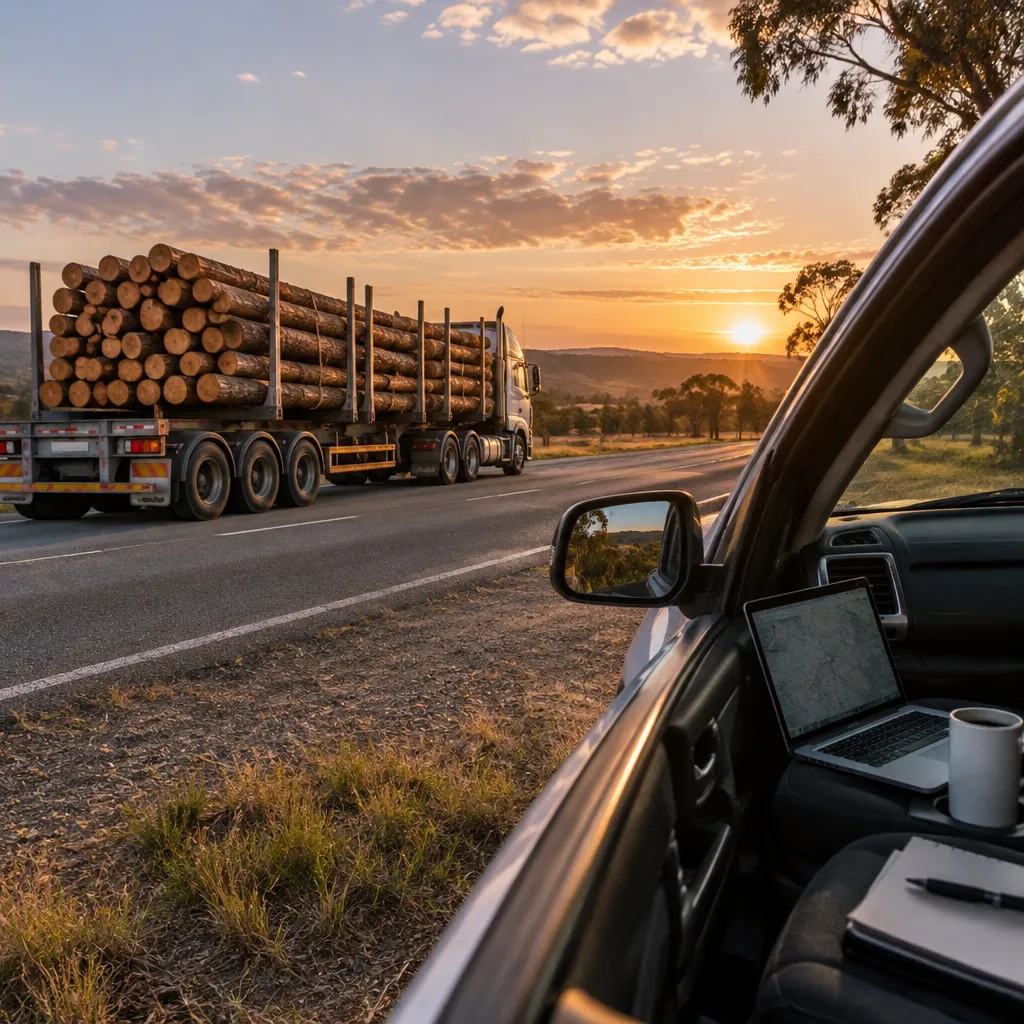
Assembling a complete file
Gather your business registration details, recent bank statements, the quote or invoice for the truck and your insurance details. Add a clear one-page summary of the work the truck will do and who pays for it. A complete file moves through assessment faster than a file that needs chasing.
Using a mobile broker visit for a fleet decision
If you are buying your first truck while running another job, you rarely have time to sit at a desk. On Road Finance offers mobile broker visits, so you can compare structures and paperwork at your yard or site. Bring the truck quote and your last few bank statements to the meeting.
Why one application can reach many lenders
On Road Finance connects customers with over 40 lenders and credit providers. One file can be presented to lenders whose criteria suit the truck, the business and the credit history. That approach saves you from submitting the same application to lender after lender.
Pro tip: Get a written quote for the specific truck before you apply. Lenders assess the asset and its price, so an unclear quote creates delays before any decision is made.
Common Mistakes Truck Buyers Make With Finance
Most finance problems are avoidable, and they usually start before the contract is signed. The mistakes below cost operators the most money. Each one can be fixed before settlement if you catch it early.
Choosing the loan on the monthly figure alone
The lowest monthly repayment often hides the highest total cost. Compare the total repaid across each structure, including any balloon or final payment. If the total is higher, ask whether the cash flow benefit justifies the extra cost.
Borrowing the full price when a deposit would help
Borrowing the full price keeps cash in your account, but it increases the amount you repay with interest. A modest deposit that still leaves working capital intact often produces a stronger position. Balance the deposit against your cash reserve, not against your pride.
Signing before insurance and repayments are locked in
Operators sometimes sign the loan, then search for insurance and realise the premium eats into the repayment budget. Confirm the insurance cost and the repayment together before you commit. A truck that cannot be insured at a sensible price is a truck you cannot afford.
Frequently Asked Questions
Can I get a truck loan in Australia with a small deposit?
Yes, many truck loans can be arranged with a small deposit, and lenders set their own minimums. A larger deposit reduces the amount financed and the interest you pay. Use the finance repayment calculator to test both options before you decide.
What is the difference between a truck loan and a commercial vehicle loan?
A truck loan is one form of commercial vehicle loan. On Road Finance arranges both, so the right product depends on the asset’s use, price and your business profile. Tell your broker exactly how the vehicle will be used.
Can I finance a used truck through a broker?
Yes, you can finance a used truck, but lenders set age and kilometre criteria that vary. A pre-purchase inspection strengthens your file and reduces the risk of a surprise repair bill. Ask your broker to check the criteria before you buy.
Do I need a long trading history to get approved?
You need evidence of income, and a longer trading history makes that evidence easier to show. A newer business with a signed contract can still apply. Have your bank statements and contract ready to strengthen the file.
Can a broker help if my credit history is not perfect?
Yes. On Road Finance works with customers who have varying credit histories and matches each file to lenders whose criteria fit it. A broker can also show you where your application is weak before it reaches a lender.
Can I arrange insurance for the truck through the same broker?
On Road Finance offers vehicle insurance brokerage, along with insurance and warranty options. Arrange cover before the truck is delivered, because lenders expect the asset to be insured from day one.
To find out more or to discuss your options with a professional broker, please contact On Road Finance on 1300 518 580 or visit https://onroadfinance.com.au/application-form to complete an application form today!
Tell us about your experience financing a truck or work vehicle, and what you would change if you had the decision to make again.
We would love your feedback and any insights you would share with others. What perspective would you add?
