
Caravan Finance Australia: How to Fund Your Dream Caravan

Most caravan buyers walk into a sale with a budget in mind and walk out with a finance agreement that costs far more than they expected. The van price is only the start. Caravan finance in Australia works differently from a standard car loan, and the loan type, term and repayment structure you choose will decide whether your dream van is a weekend pleasure or a monthly strain. This guide explains how caravan finance works, which loan types suit which buyers, and how to fund your van without breaking the bank. We structure these loans every day for customers in Sydney, Penrith and across Australia.
Table of Contents
- Quick Takeaways
- Why Caravan Finance Works Differently
- Secured vs Unsecured Caravan Loans
- Caravan and Motor Home Loan Options
- The Balloon Payment Trap
- Working Out Repayments Before You Sign
- Choosing the Right Loan Type
- Insurance, Warranty and Hidden Costs
- How to Apply for Caravan Finance
- Common Mistakes That Cost Caravan Buyers Money
- Frequently Asked Questions
- References
Quick Takeaways
| Key Insight | Explanation |
|---|---|
| Secured loans usually cost less | A secured caravan loan uses the van as security, which generally gives you a lower interest rate and longer terms than an unsecured personal loan. Choose it for new or recent vans. |
| Check the balloon before you sign | A balloon payment is a lump sum due on the final day of the loan. Skipping it lowers your regular repayments, but the full amount still comes due at the end. |
| Compare total cost, not the monthly figure | Add up every repayment over the full term and compare that total across offers. The lowest monthly payment often carries the highest total cost. |
| Match the loan term to the van’s age | A seven-year loan on a two-year-old van protects your equity. The same term on a 15-year-old van leaves you owing more than the van is worth for years. |
| Budget for running costs | Registration, insurance, servicing, storage and towing add to the true cost of ownership. Build them into your monthly figure before you apply. |
| Low doc loans suit self-employed buyers | If your recent tax returns do not clearly show your income, a low doc loan can get you approved, but expect a higher rate in exchange. |
| Get pre-approval before you negotiate | Knowing your borrowing limit lets you negotiate on the van price rather than on the monthly repayment. |
Why Caravan Finance Works Differently
A caravan is a depreciating asset, and lenders price your loan with that in mind. The lender’s question is not only whether you can repay, but whether the van will still be worth close to the loan balance in five years. That single fact shapes every decision in this guide.

Caravan finance sits in the same family as vehicle finance, but the rules are tighter. Lenders assess the van’s age, condition, make and purchase price before they settle on a maximum amount and term. A buyer who understands those assessment points can shape the structure of the loan before signing.
How lenders assess the age of your van
Many lenders tie the maximum loan term to the age of the van at settlement. A new van can qualify for the longest terms on offer, while an older van often means a shorter term or a lower maximum amount. Ask about the age cutoff before you commit to a specific model, because it can rule out the loan you planned on.
Why your deposit matters more on a van
A deposit reduces the amount you borrow against an asset that is losing value. A larger deposit lowers the chance that you will owe more than the van is worth during the early years of the loan. Without one, you can end up in that position within the first year, especially on a van that depreciates quickly.
Pro tip: Check the van’s current market value from recent sale listings before you apply. Lenders assess value on their own terms, and any gap between the price you pay and the value they assess means you need a bigger deposit.
Secured vs Unsecured Caravan Loans
The biggest decision in caravan finance is whether the loan is secured by the van itself. A secured loan gives the lender the van as collateral, and an unsecured personal loan does not. That choice changes your interest rate, your maximum term and what happens if repayments stop.
Secured caravan loans: lower rates, tighter terms
A secured caravan loan is the right choice for buyers purchasing a new or recent van. Because the lender holds the van as security, it can offer a lower interest rate and longer terms. If you default, the lender can repossess and sell the van to recover the debt, so treat the repayment schedule as non-negotiable.
Our position is simple. If the van is the main purchase and it sits within the lender’s age cutoff, choose a secured loan. You pay less interest over the life of the loan and keep more control over the terms.
Unsecured personal loans: flexibility at a cost
An unsecured personal loan does not attach to the van. That matters if the van is older, if you intend to use it as a work tool, or if you want to buy from a private seller without waiting on a secured approval. You pay for that flexibility with a higher interest rate and usually a shorter maximum term.
Pick unsecured only when the van falls outside secured criteria. Speed is not a reason to accept a higher rate. Compare both structures on total repayable amount, then decide.
Caravan and Motor Home Loan Options
Caravans are bought in several ways, from dealer sales to private treaties, and each situation suits a different loan. Caravan and motor home loans are built around the asset itself. Personal loans and low doc loans cover the gaps that asset-based products leave open.
Caravan and motor home loans
Caravan and motor home loans are structured around the asset. They account for the van’s age, its resale profile and its purchase price, and they suit buyers who want a clear term and a fixed repayment schedule. We arrange these loans for customers in Sydney, Penrith and across Australia.
Expect the lender to ask for the dealer invoice or purchase contract, along with a valuation of the van. Having those documents ready speeds up approval and stops you losing a deal to a seller who is waiting on your answer.
Low doc loans for self-employed buyers
If you are self-employed and your most recent tax returns do not clearly show your income, a low doc loan can still get you approved. Lenders accept a simpler set of income documents in exchange for a higher rate and, often, a larger deposit. Use a low doc loan as a bridge, then refinance once your income is documented clearly.
Do not accept a low doc loan just to avoid paperwork. Gather your documents first. The rate difference is the real price of skipping them, and it compounds over the full term.
The Balloon Payment Trap
A balloon payment is a lump sum due on the final day of the loan. It lowers your regular repayments because you are not paying down the full amount across the term. The catch is that the balloon does not disappear. It sits at the end of the contract, waiting for you.
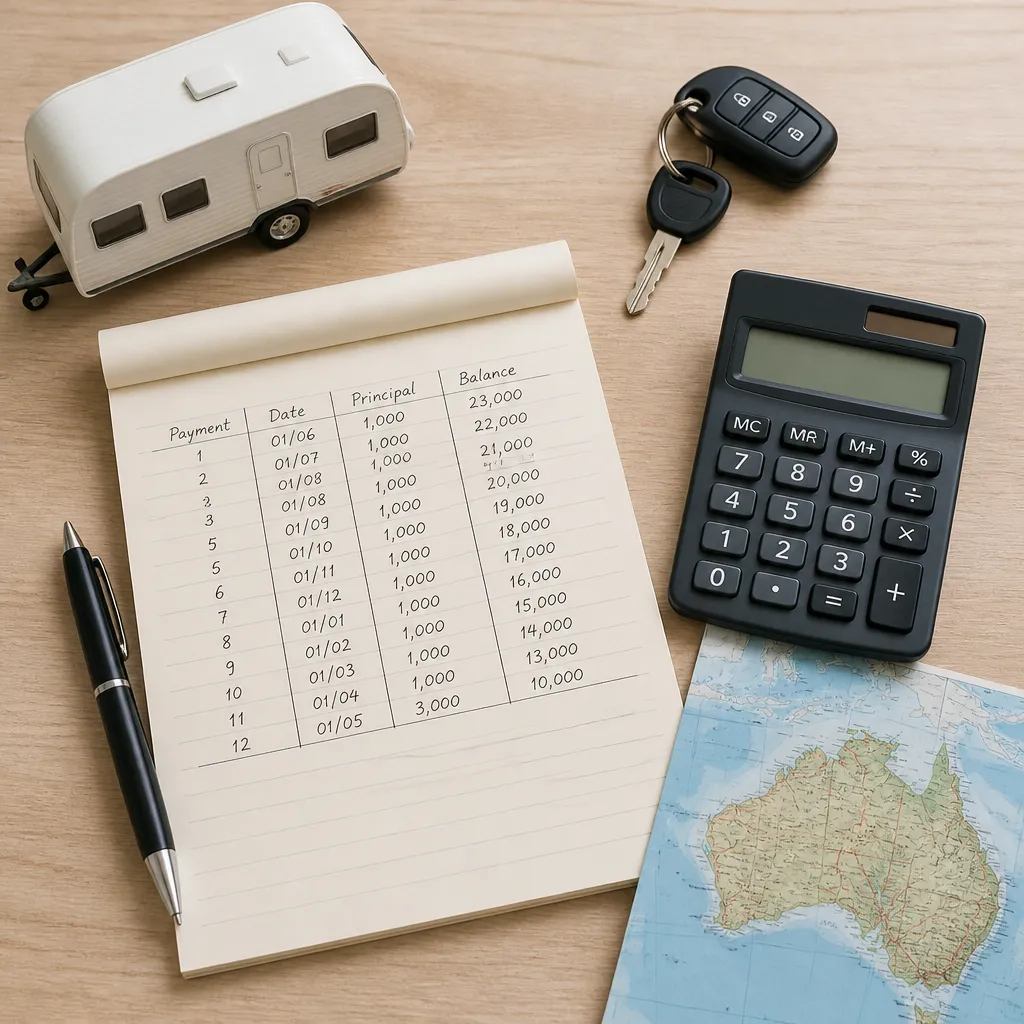
How a balloon payment works in practice
Take a $60,000 van with a 30 percent balloon, which means $18,000 is due at the end. You repay the remaining $42,000 across the term, then you must pay the $18,000 in full, refinance it or sell the van to cover it. Buyers who ignore that final figure often find themselves forced to sell a van they have not finished paying for.
Make sure the balloon amount appears in the written contract, not only in a verbal quote. A figure you were told over the phone carries no weight when the due date arrives.
When a balloon makes sense
A balloon suits buyers who have a confirmed plan for the final sum, such as a known lump sum from a business sale or a planned refinance. For everyone else, a balloon makes a van look affordable today at the expense of your position in five years. Skip it unless you can name the source of the money right now.
Pro tip: Ask for the total amount payable with and without the balloon. The lower monthly figure is only a saving if you can cover the lump sum on the due date.
Working Out Repayments Before You Sign
The monthly repayment is the wrong number to negotiate on. A longer term lowers the monthly figure and raises the total you pay. Work out the total cost of each option before you accept any offer, and use a loan repayment calculator to test your numbers at different terms.
Term length and total interest
Consider a $50,000 caravan loan at an illustrative 9 percent per year. Over five years, the repayment is roughly $1,038 per month and total interest is about $12,300. Stretch the same loan to seven years and the repayment drops to roughly $805 per month, but total interest rises to about $17,600.
That lower monthly figure costs you roughly $5,300 more over the life of the loan. Choose the shortest term your budget can carry without strain. A longer term is only the right choice when it protects your cash flow in a genuine emergency.
Negotiate the van price and the loan term, not the monthly repayment. A low weekly figure can hide the most expensive version of the loan.
Budgeting for running costs
Repayments are only one line of the budget. Registration, insurance, servicing, storage and towing all add to the monthly cost of owning a caravan. Add those costs to your repayment figure before you apply, then check whether the total fits your income with room to spare.
A common mistake is budgeting for the loan and forgetting the van. Buyers who skip this step often cut back on travel within the first year, which defeats the purpose of buying the caravan at all.
Choosing the Right Loan Type
Three structures cover most caravan purchases. Each one suits a specific buyer, and the table below sets out where each works best and what it costs you.
| Loan Type | Best For | Main Trade-Off |
|---|---|---|
| Secured caravan loan | Buyers purchasing a new or recent van with a clear income record | The van is held as security, so the lender can repossess it if repayments stop |
| Unsecured personal loan | Buyers with older vans that fall outside secured criteria, or private sales that need fast settlement | A higher interest rate and usually a shorter maximum term |
| Low doc loan | Self-employed buyers whose recent tax returns do not clearly show income | A higher rate and often a larger deposit in exchange for simpler documents |
If you are buying a new van with a clean income record, the secured caravan loan wins on cost. If your income is hard to document, the low doc loan is the practical route. Use the unsecured personal loan only for older vans that fall outside secured criteria.
Matching the loan to your situation
Start with the van’s age and your income evidence, then pick the structure. Most buyers who struggle with caravan finance chose the wrong structure at the start, then tried to fix it with a longer term. Matching the loan type to the asset and your paperwork avoids that problem entirely.
Insurance, Warranty and Hidden Costs
Insurance and warranty cover can be added to the loan, and that is where many buyers quietly inflate their repayments. An add-on that looks small upfront can add a noticeable amount to the total you repay once interest is charged on it. Look at each add-on separately, and ask whether you would buy it with cash.

Insurance and warranty add-ons
On Road Finance offers insurance and warranty products and vehicle insurance brokerage, so you can arrange cover alongside your loan. Compare the cover details, excess and exclusions rather than the monthly add-on price. Choose cover that matches how and where you will tow and store the van.
Do not let a bundled product hide the true cost of the loan. Ask for the total amount repayable with and without each add-on, so you see exactly what each one adds to the debt.
Hidden costs to plan for at settlement
Settlement can bring fees and charges that do not appear in the sticker price, including dealer documentation fees, registration transfers and inspection costs. Ask for an itemized list of every charge before you sign. Any cost you learn about after settlement is money you have already committed to borrowing.
Pro tip: Compare offers on the amount financed, not the van price. Once fees and add-ons are included, the amount financed shows the true size of your loan.
How to Apply for Caravan Finance
A clean application moves faster and gives you more room to negotiate. Gather your documents before you start, then let a broker match the application to the lender most likely to approve your structure.
Documents to gather before you apply
Prepare proof of identity, recent payslips or business financials, bank statements, and the dealer invoice or purchase contract for the van. If you are buying privately, have the seller’s details and a valuation ready. A complete set of documents cuts the number of follow-up requests from lenders.
Working with a broker for same-day approvals
On Road Finance is an Australian finance broker that connects customers with loan options from over 40 lenders and credit providers. Our service includes same-day approvals, personalized one-on-one broker support and mobile broker visits. You work with one point of contact who understands lender criteria, rather than filling in separate forms for each provider.
Pro tip: Get pre-approval before you negotiate with the seller. Knowing your borrowing limit lets you negotiate on the van price, not on the monthly repayment.
Common Mistakes That Cost Caravan Buyers Money
Most costly caravan loans come from the same handful of errors. Each one is avoidable if you check the numbers before you sign, rather than after the first repayment leaves your account.
Signing before you compare total repayable amounts
A dealer quote that focuses on the weekly figure is designed to make the loan feel affordable. Ask for the total repayable amount on every offer, then compare those totals side by side. The offer with the lowest repayment is often the one that costs the most.
Negotiating the monthly payment instead of the price
When you negotiate the monthly payment, the seller can extend the term and hit your number while raising the true cost of the van. Negotiate the cash price first, then arrange finance on that figure. Keep the term as short as your budget allows.
Frequently Asked Questions
How much deposit do I need for a caravan loan in Australia?
Aim for at least 10 percent of the purchase price. A larger deposit reduces the amount you borrow against a van that loses value, and it gives you more room with lenders on term and rate.
Can I finance an older caravan?
Yes, but the structure changes. Many lenders set a maximum term based on the van’s age, so an older van usually means a shorter term, a lower maximum amount or an unsecured personal loan. Ask about the age cutoff before you buy.
Is a secured or unsecured caravan loan cheaper?
A secured loan is cheaper for the same amount and term because the van acts as security for the lender. Compare the total repayable figures on both options to confirm the difference for your situation.
What is the difference between a caravan loan and a motor home loan?
A caravan is towed, while a motor home is self-propelled, so lenders can treat the two differently. Ask the lender which product applies to your specific vehicle before you apply.
Can I get caravan finance with a less than perfect credit history?
Yes. On Road Finance works with customers who have varying credit histories. Expect a higher rate and a tighter structure, and compare your options before you commit.
Do I need a broker to finance a caravan?
No, but a broker compares lenders on your behalf and handles the application process with you. That saves time and reduces the chance of applying to the wrong lender for your structure.
To find out more or to discuss your options with a professional broker, please contact On Road Finance on 1300 518 580 or visit https://onroadfinance.com.au/application-form to complete an application form today!
Share your experience financing a caravan, including the loan type you chose and what you would change, so other buyers can learn from it.
We would love your feedback and any insights you would share with others. What perspective would you add?
